What To Build | 7 Fun and Creative Ways to Build LEGO® Water
WHAT'S TO BUILD
7 Fun and Creative Ways to Build LEGO® Water
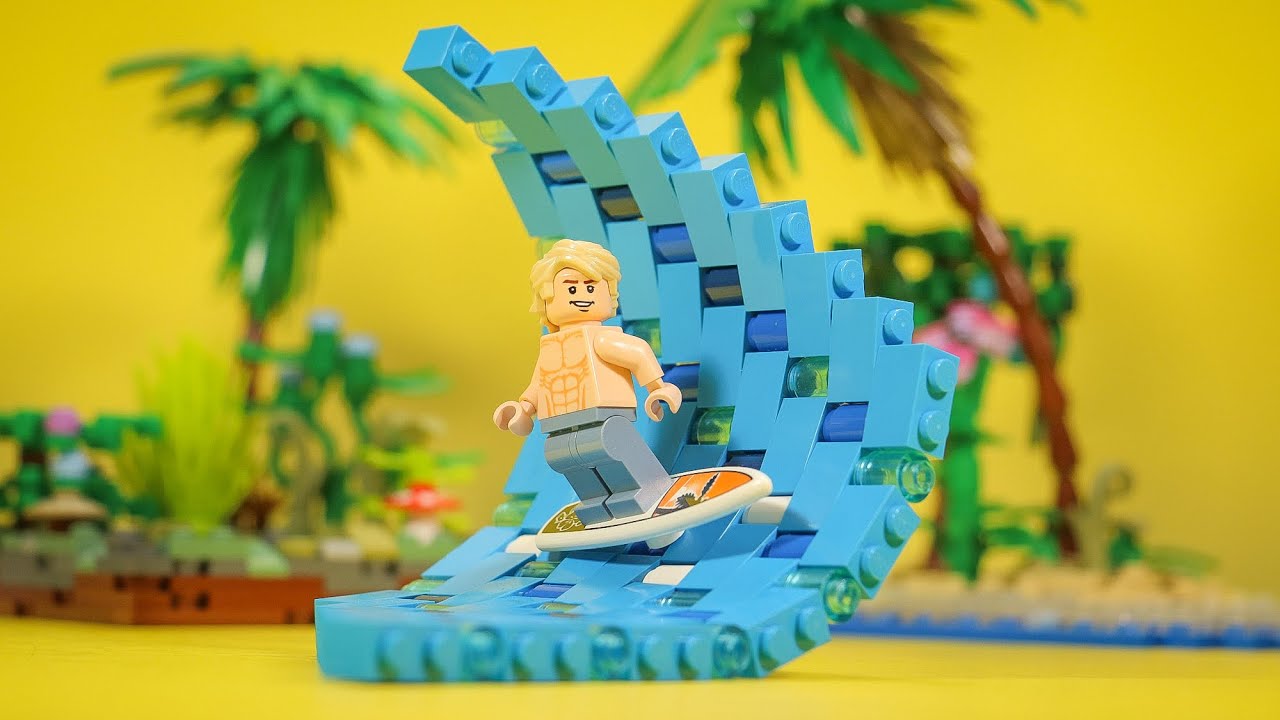
LEGO® Water is one of the most deceptively difficult elements to recreate. Unlike buildings or vehicles, water has no fixed form — it reflects light, changes colour with depth, and constantly feels like it’s in motion. Translating all of that into solid bricks is what makes LEGO water such a fascinating challenge for builders.
In many official LEGO sets, water is often represented with flat blue plates or a small mix of transparent pieces. It’s clean, practical, and works well for play. But once you step into display builds and MOCs, those flat surfaces can start to feel lifeless. That’s where alternative water techniques come in.
What Builders Try to Achieve with LEGO Water
When builders talk about “good” LEGO water, they’re usually aiming for one or more of these effects:
-
Depth – lighter colours near the edge, darker tones further out
-
Reflection – transparent or glossy elements to catch light
-
Texture – uneven surfaces that break up large flat areas
-
Movement – curves, waves, or flowing patterns that suggest motion
Different scenes need different solutions. Calm canals, bubbling hot tubs, and crashing ocean waves shouldn’t all look the same — and it gives builders plenty of ways to interpret each.
7 Ways to Build LEGO Water
To explore how these ideas translate into actual builds, this video by TD BRICKS walks through seven distinct ways to build LEGO water, ranging from simple techniques that use common parts to more advanced methods designed for large display pieces. Rather than presenting a single “best” solution, it shows how each approach works visually and where it shines.
The techniques featured cover a variety of scenarios, including small water details, layered surfaces that suggest depth, flowing canals, and bold wave structures. Seeing them side by side makes it much easier to understand how subtle changes in parts and layout can completely change the feel of a build.
Watch the full video here:
Final Thoughts
LEGO water isn’t about finding the most complex technique — it’s about choosing the right one for the story your build is telling. Many of the most convincing scenes mix multiple approaches, adapting them to suit scale, setting, and mood.
If you’ve ever felt limited by flat blue plates, these seven methods are a great place to start experimenting with texture, depth, and movement in your next MOC.
Which LEGO water style would you try first?
Do you like building cool LEGO® MOC and are you a real LEGO® fan?
Share it with us by tagging us!